The Best Probiotics for Dogs: 4Natural Options That Actually Work
Table of Contents
In this guide, you’ll learn which natural best probiotics for dogs truly work , how to choose the right one, and how to use them safely for long-term gut health.
If you’re searching for the best probiotics for dogs, chances are your dog is dealing with digestive issues — loose stools, gas, allergies, or recurring stomach problems. As a veterinarian and a dog owner, I’ve been there too… !!!
Probiotics are often recommended, ! but not all probiotics are created equal.
Some help… Many don’t. And a few can actually make things worse if chosen incorrectly.
Why Probiotics can be life changing for Dogs
Your dog’s gut is home to trillions of bacteria. When this delicate ecosystem is balanced, digestion runs smoothly, immunity stays strong, and inflammation stays under control.
When it’s disrupted by antibiotics, stress, poor diet, allergies, or illness symptoms appear:
- Chronic diarrhea or constipation
- Excessive gas or bloating
- Skin issues and itching
- Bad breath
- Frequent ear infections
- Anxiety or restlessness
Probiotics help by reintroducing beneficial bacteria that restore balance and support healing from the inside out.
What Makes a Probiotic “Good” for Dogs? (Vet Perspective)
Before we talk about products, here’s what I look for as a veterinarian:
Dog-Specific Strains
Human probiotics don’t always survive or function well in a dog’s digestive system.
Multiple Strains
A healthy gut needs diversity, not just one bacteria.
Adequate CFUs
Look for at least 1–5 billion CFUs for small dogs and 5–10 billion CFUs for medium to large dogs.
No Artificial Sweeteners
Avoid xylitol, artificial flavors, or unnecessary fillers.
Shelf Stability
Some probiotics require refrigeration, others don’t but they must remain alive.
The Best Probiotics for Dogs (That Actually Work)
1. Kefir (Plain & Unsweetened)
Kefir is one of my favorite natural and best probiotics for dogs and the one I personally use.
Why it works:
Kefir contains multiple strains of beneficial bacteria and yeast that support digestion and immune balance.
How to use:
- Start with 1 teaspoon for small dogs
- 1 tablespoon for medium dogs
- 2 tablespoons for large dogs
Choose plain, unsweetened kefir with no added sugar or flavoring.
⚠️ If your dog is dairy-sensitive, start slowly or skip.
2. Soil-Based Probiotics (SBOs)
Soil-based probiotics mimic what dogs would naturally ingest in the wild.
Benefits:
- Extremely resilient
- Survive stomach acid
- Support long-term gut balance
These are especially helpful for dogs with chronic digestive issues or post-antibiotic recovery.
3. Saccharomyces boulardii
This is a beneficial yeast, not bacteria and one of the powerful and best probiotics for dogs.
Best for:
- Diarrhea
- Antibiotic-related gut damage
- Leaky gut
- Inflammatory bowel conditions
As a vet, this is one of my go-to options for acute digestive flare-ups. It’s one of the best probiotics for dogs.
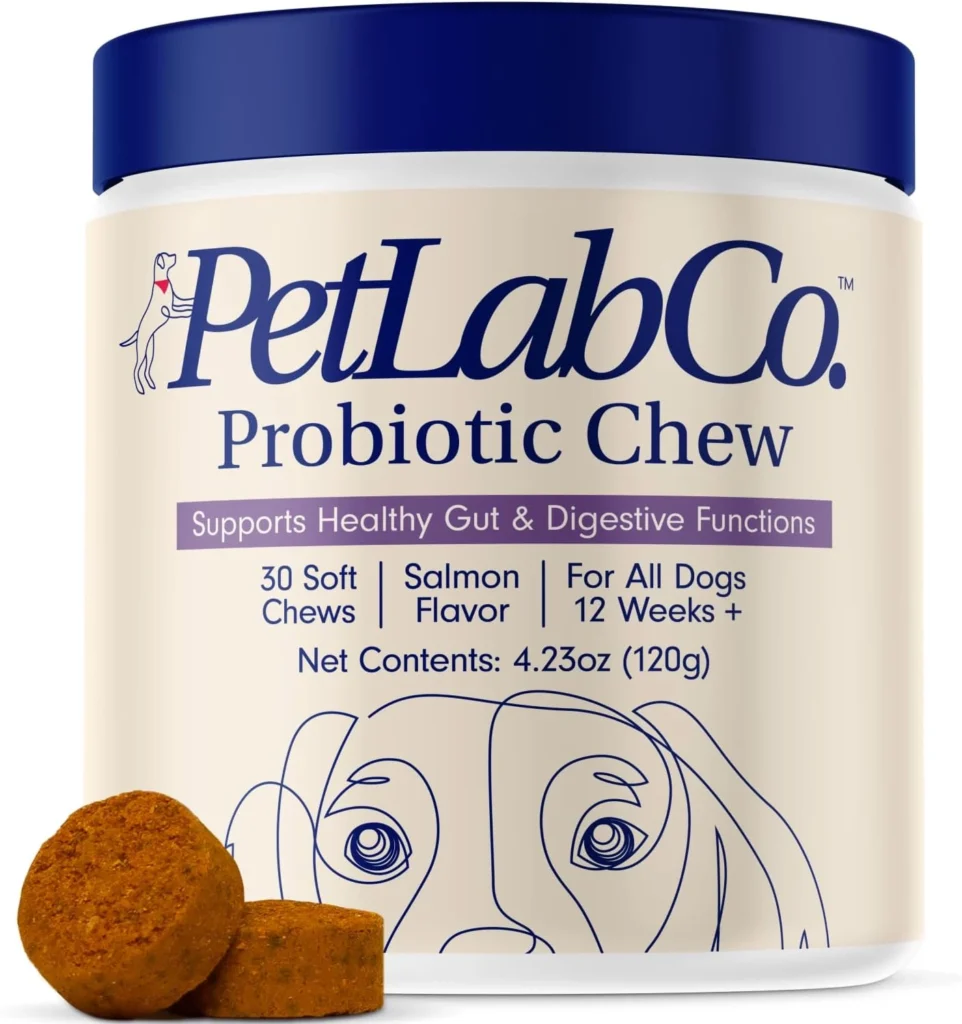
Amazone : PetLab Co. Probiotics for Dogs
I highly recommend this probiotic especially if your dog has sensitive stomachs and history of gut issues .. because it contains fewer strains and no artificial additives.
4. Fermented Vegetables (Very Small Amounts)
Naturally fermented foods like sauerkraut or fermented carrots can help but only in tiny quantities.
Important rules:
- Must be unpasteurized
- No vinegar
- No spices or onions
Use as a supplement, not a main probiotic source.
Powder, Capsule, or Food ; Which Is Best?
From experience, here’s what works best:
- Powders: Easy to mix into food, great for picky eaters
- Capsules: More precise dosing, ideal for therapeutic use
- Food-based probiotics: Gentle, best for maintenance
For dogs with active gut issues, I usually recommend a combination : a high-quality supplement + natural food sources.
How Long Do Probiotics Take to Work?
This depends on your dog’s condition.
- Mild digestive upset: 3–7 days
- Chronic gut imbalance: 3–6 weeks
- Post-antibiotic recovery: 4–8 weeks
Consistency matters more than dose. Slow, steady improvement is a good sign.
Common Mistakes I See Pet Parents Make
❌ Switching probiotics too often
❌ Using human probiotics without guidance
❌ Giving too much too fast
❌ Ignoring diet quality
❌ Expecting overnight results
Healing the gut takes time … but when it works, the results are worth it.
Personal Experience: How I Helped a patient Heal Naturally
Let me share a very real story from the clinic.
I meet Léo at the clinic , he is a medium-sized mixed breed with a sensitive nature and an even more sensitive stomach. For years, he seemed “mostly fine,” but little signs kept popping up that I couldn’t ignore.
The First Symptoms The owners Noticed
It started subtly:
- Soft stools that came and went
- Occasional diarrhea after stress or diet changes
- Excessive gas (especially at night)
- Bad breath that brushing didn’t fix
- Periods of restlessness and anxiety
As a veterinarian, I knew these weren’t random. They were classic signs of poor gut health …. but like many pet parents, I initially underestimated how deeply the gut was involved.
What Didn’t Work at First
At first, the owners tried what many people do:
- Switching kibbles too often
- Using random probiotics without consistency
- Treating symptoms instead of causes
Some things helped temporarily, but the issues always came back.
That’s when leo’s owners decided to slow down and take a more intentional, holistic approach. We had a plan and that’s what we used :
The Probiotics That Actually Helped Léo
After reassessing everything, I introduced probiotics gradually and strategically:
1. Saccharomyces boulardii
This is one of the best probiotics for dogs with sensitive stomachs.
This was the turning point during flare-ups.
It helped firm stools, reduce inflammation, and calm his digestive system — especially after stressful events.
2. Soil-Based Probiotic (SBO)
I added this next for long-term balance. These strains are incredibly resilient and helped stabilize his gut over time.
3. Small Amounts of Kefir
Just a teaspoon at first. This supported diversity in his microbiome and helped with digestion , without overwhelming his system.
We didn’t give everything at once. We introduced one probiotic at a time and watched closely. That patience made all the difference.
The Diet Changes That Supported Healing
Probiotics alone weren’t enough .. diet mattered just as much.
Here’s what worked for Léo:
- A simple, limited-ingredient diet
- No artificial flavors or preservatives
- Added steamed pumpkin and zucchini for gentle fiber
- High-quality protein he tolerated well
- Plenty of hydration
We avoided sudden changes and focused on consistency, not perfection. and we highly focused on anti-inflammatory foods..
Within a few weeks, the improvements were clear.
The Results (And Why I Trust This Approach)
Over time:
- His stools became consistently firm
- Gas and bloating disappeared
- Bad breath improved
- His energy stabilized
- Anxiety episodes became rare
But the biggest change?
He was comfortable again , relaxed, playful, and present.
This experience changed how I approach gut health with both my patients and my own dogs.
It reminded me that healing is rarely about one product. It’s about the right combination, given with patience and intention.
Why I Share This Story
I’m sharing Léo’s story because I know how frustrating gut issues can be.
If you’re here reading this, you’re probably worried about your dog and you want real answers, not marketing hype.
Everything I recommend on this blog is something I’ve:
- Used personally
- Seen work in practice
- Researched deeply as a vet
And most importantly …. something I trust.
Gentle Reminder
Every dog is different. What worked for Léo may need adjustment for your dog, but it’s a starting point grounded in both experience and science.
Should Every Dog Take Probiotics?
Not necessarily … but many dogs benefit, especially if they:
- Have allergies
- Take medications
- Eat processed food
- Experience stress
- Have a history of gut issues
When in doubt, start gently and observe.
Final Thoughts
Probiotics aren’t magic but when chosen wisely, they are one of the most powerful tools for improving your dog’s overall health naturally.
Listen to your dog. Go slow. Choose quality over hype.
Your dog’s gut will thank you.
What are the best probiotics for dogs with digestive issues?
TThe best probiotics for dogs usually contain multiple strains, including Lactobacillus and Bifidobacterium, and are introduced gradually. In my experience as a vet, dogs with sensitive stomachs often respond best to simple, clean formulas without unnecessary additives.
How long do best probiotics for dogs take to work?
Most dogs start showing improvement within 2 to 4 weeks. When I introduced probiotics to my own dog, I noticed firmer stools and less gas after about two weeks, with more consistent results after one month.
Are natural probiotics safe for dogs long-term?
Yes, natural probiotics are generally safe for long-term use when chosen carefully. The best probiotics for dogs support the gut microbiome without suppressing the body’s natural functions, especially when paired with a stable, high-quality diet.
Can probiotics help dogs with allergies or anxiety?
Absolutely. The gut plays a key role in immune balance and behavior. I’ve seen dogs with skin allergies and mild anxiety improve once the best probiotics for dogs were added consistently to their routine.
Should probiotics be given every day to dogs
In most cases, yes. Daily use allows the best probiotics for dogs to maintain healthy gut bacteria levels. That said, I always recommend starting slowly and adjusting based on your dog’s response.
Do puppies and senior dogs need different probiotics?
Puppies and senior dogs often have more delicate digestive systems. The best probiotics for dogs at these life stages are gentle, strain-specific, and free from artificial fillers.
Written by SERENA SMITH , VET, pet health writer and holistic pet care enthusiast, with vet-reviewed recommendations.